
FROLIM
FROLIM is the next step beyond LLMs: moving AI from generating answers to understanding, predicting, and acting on the world. Built on a brain-inspired cognitive architecture, FROLIM enables AI to learn from experience, identify why its predictions fail, and correct its understanding in a single learning cycle—creating systems that not only know and communicate, but anticipate consequences, adapt to change, and interact intelligently with the real world.
Four family members

- Memory — a salience write-gate decides what business experience becomes knowledge (clients, prices, procedures, tone)
- One-trial correction — a single correction permanently changes customer-facing behavior
- Causal failure diagnosis — prediction-error arbitration: wrong belief, failed tool, or changed world, with an honest “unknown”
- FROLIM-side data ownership — the knowledge store lives on the business’s side, not in any provider’s cloud; providers see only minimal task slices
- Model-agnostic by design — attaches to any host LLM via API; swap the model, keep the knowledge and corrections
- Full audit trail — every write, correction, and decision is versioned, inspectable, and exportable
- Scoped permissions — per-action approval gates; sensitive-tagged knowledge never leaves, or routes only to local/EU models

FROLIM_04: Multimodal World Model (vision in, renderable imagery out)
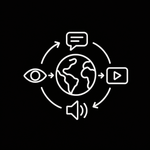
- Visual + language input — camera and text feed one world model: perception turns scenes into physics-annotated graphs, language turns meaning into the same graph
- Optical output — images and video are rendered from the world graph, not sampled from diffusion noise
- Generation with provenance — each output frame is auditable against the beliefs that produced it
- Parametric failure attribution, made visible — when a rendered prediction is wrong, arbitration points at the parameter
- One-trial revision, end to end — a single disconfirmation updates the world parameter and the next render reflects it immediately, without retraining
- Consistent long rollouts — multi-step predictions and rendered scenario videos stay stable over 100+ steps because dynamics run on the graph, not on pixels